How has the 2026 election changed the composition of the Senedd, and what challenges face the next Welsh Government?
The 2026 Senedd election has led to the biggest change in the composition of the Welsh Parliament since the start of devolution. The expansion of the Senedd to 96 Members, together with the introduction of a more proportional electoral system, has created a more politically diverse Chamber, with no party holding an overall majority.
The chart below provides a detailed breakdown of the new composition of the Senedd.
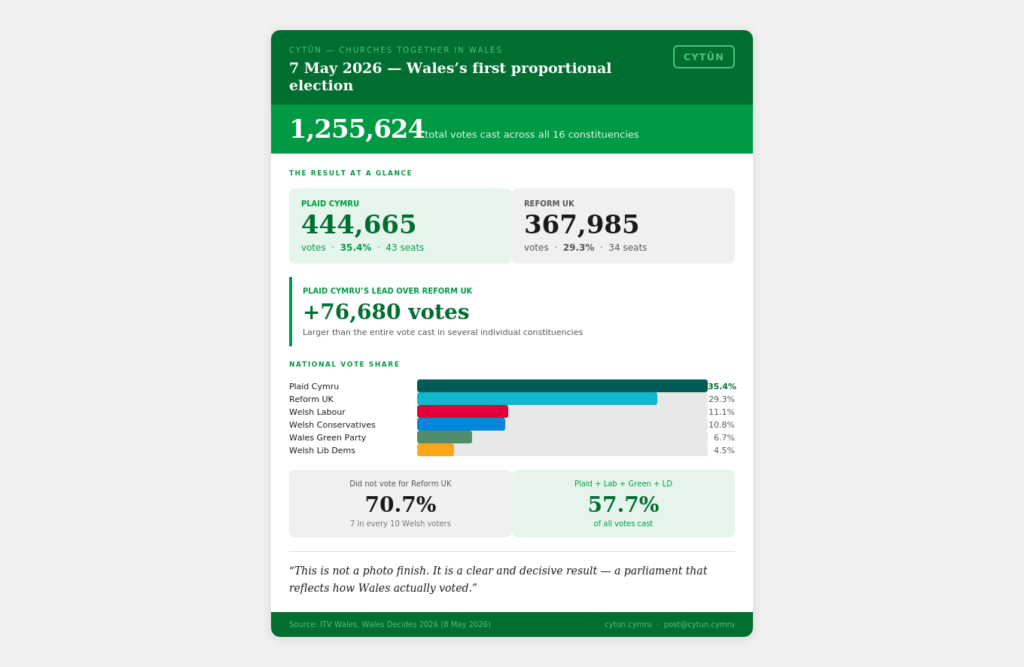
As Plaid Cymru becomes the largest party in the Senedd for the first time since devolution, its leader Rhun ap Iorwerth has declared his intention to secure the role of First Minister.
Reform UK has also gained significant representation in the Senedd for the first time, enough to form the opposition, while Labour has seen a dramatic reduction in its number of seats. Meanwhile, the Conservatives have also lost ground, and the Liberal Democrats remain with one elected member with the Greens also winning two seats for the first time.
The Senedd is expected to operate in a more collaborative and negotiated political environment. However, with major policy differences between the centre-left parties and Reform, this will not be easy to achieve.
Building coalitions and working together on specific issues will play a more important role in forming and sustaining the next Welsh Government. Smaller parties and individual groups may have greater influence over legislation and policy priorities than in previous Senedds.
The intention behind the new electoral arrangements was to make the Senedd more representative of votes cast across Wales. The results suggest that the balance of seats reflects the national share of the vote more closely than under the previous system.
Dr Cynan Llwyd, General Secretary of Cytûn said: “Churches Together in Wales offers its congratulations to Plaid Cymru on its victory in the 2026 Senedd election, and to Rhun ap Iorwerth as he prepares to serve as First Minister of Wales.
At this moment of change in our national life, we pray for him, for all elected Members of the Senedd, and for all who carry the responsibilities of public service. We ask God to grant wisdom, humility and courage, and to strengthen every effort made for the common good.
The churches of Wales stand ready to work constructively with the new Welsh Government and with partners across society to foster unity, cooperation and hope. We particularly welcome the call to “uncompromising compassion”, and pray that this spirit will shape public life in Wales in the years ahead.”